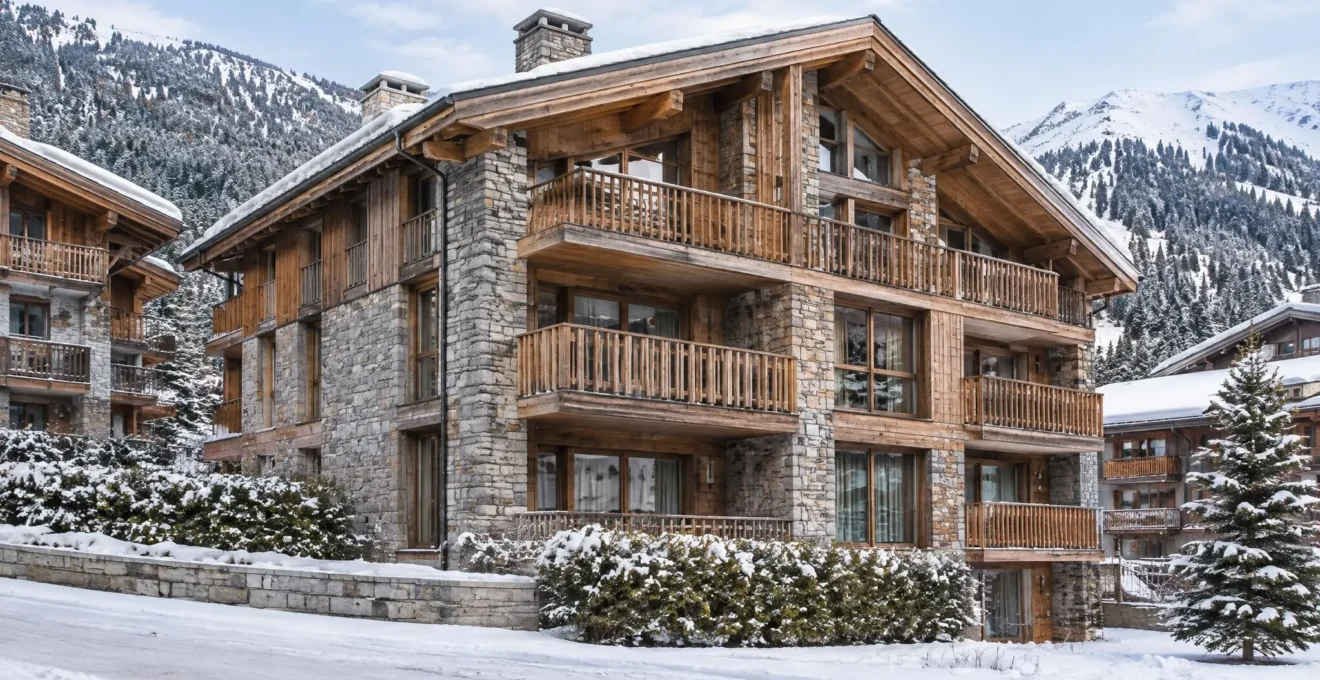
Buying an apartment or penthouse in Courchevel requires more than finding a property with attractive views or convenient ski access. Before committing, assess the exact location, the condition of the apartment and the wider building, the French co-ownership documents, technical diagnostics and the full cost of ownership. Penthouse buyers also need to establish who owns and maintains the terrace and roof structures. These checks help distinguish an appealing listing from a property that genuinely matches your requirements.
For buyers considering an apartment or penthouse in the resort, finding the right property involves more than comparing prices and floor plans. Location, access to the slopes, the surrounding environment and the property’s potential for personal use or rental should all be taken into account. Reviewing available listings can help narrow down the options and identify properties that match these priorities. Buyers looking to find a property in Courchevel with Altitude Courchevel Immobilier can explore different types of accommodation and compare their features before deciding which opportunities are worth considering.
Start with the Exact Location and Your Intended Use
Courchevel encompasses several distinct villages and residential areas. A property in Courchevel 1850 does not necessarily offer the same surroundings, access or everyday convenience as one in Moriond or another part of the resort. Start by identifying the precise address and assessing how it fits your priorities.
Consider the practical distance to ski lifts, shops, restaurants, transport and other services. Check the actual route rather than relying exclusively on a listing’s description of proximity to the slopes. A seemingly short walk can be considerably more demanding when the route involves steep gradients, icy surfaces or heavy snowfall.
Other factors deserve attention during a visit:
- Orientation and daylight: observe how sunlight reaches the living spaces and balconies.
- Noise: investigate nearby roads, nightlife, lifts and seasonal activity.
- Winter access: establish how the entrance, parking and approach roads are managed during snowfall.
- Surroundings: ask about planned developments that could affect views, access or privacy.
- Daily convenience: consider storage, parking, shops and transport rather than focusing exclusively on skiing.
Your intended use also matters. A property primarily used as a private mountain residence may have different priorities from one intended for occasional seasonal letting. In the latter case, investigate applicable rental rules, building restrictions and management arrangements before assuming that rental use is possible.
Once you have identified the Courchevel area, property size and practical features that suit your plans, the next step is to compare actual listings rather than relying on general resort descriptions. A listing is a starting point, not proof of its legal or technical condition.
Inspect the Apartment, Building and Penthouse Features
A viewing should examine the property’s actual condition rather than relying on recently renovated surfaces or attractive photographs. Look at windows, glazing, insulation, heating, ventilation, plumbing and electrical installations. Ask how the heating system operates and whether its maintenance records are available.
Pay particular attention to signs of moisture. Discolouration, peeling finishes, condensation around windows and musty smells can indicate problems that deserve further investigation. Check water pressure, drainage and visible pipework. If you notice movement cracks, persistent dampness or evidence of water ingress, arrange an assessment by an appropriately qualified building professional.
Do not confuse the diagnostic de performance énergétique (DPE), France’s energy performance assessment, with a comprehensive building survey. It provides information about energy performance and associated characteristics, but it does not establish that the structure, roof or plumbing is defect-free. Read the report’s scope, date and limitations, and consider actual heating arrangements and available consumption records separately.
The property’s technical diagnostic file may also include reports concerning lead, asbestos, electrical and gas installations, termites and natural or technological risks. Which reports are required depends on factors such as the property’s age, installations, location and applicable French rules. Ask the notaire to confirm which diagnostics apply to the apartment and whether the supplied reports are valid.
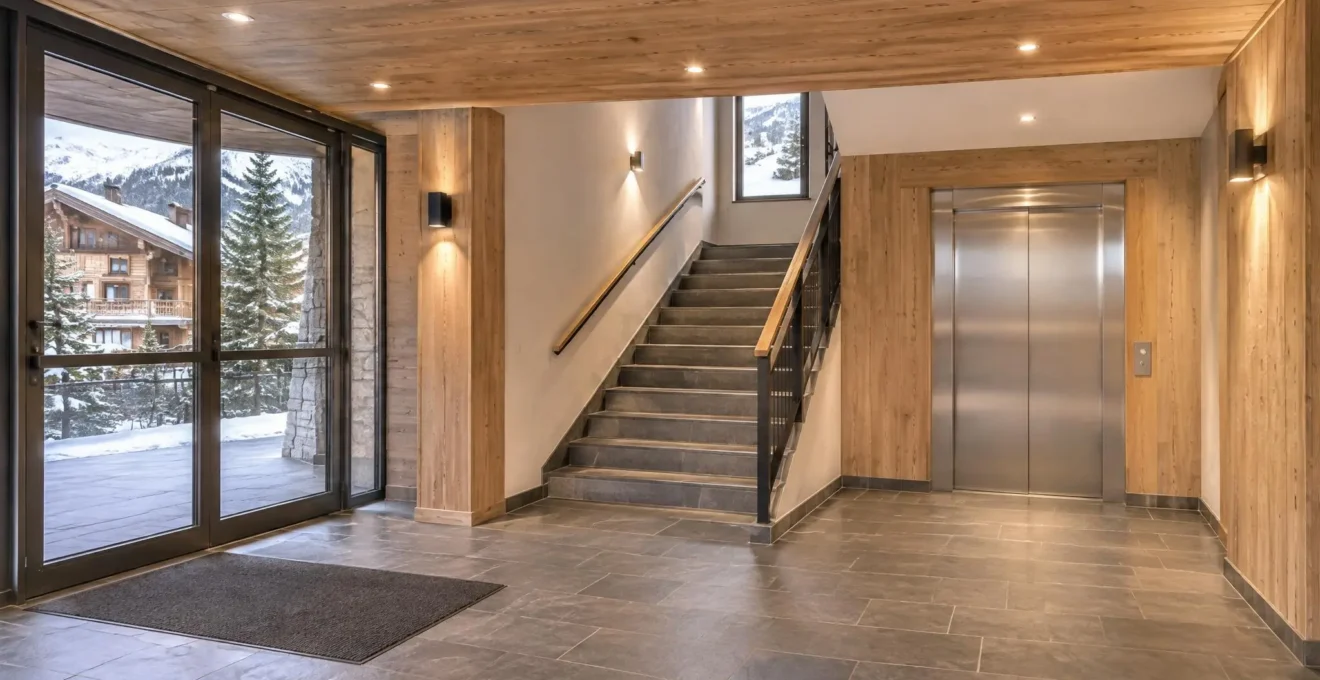
Common areas also deserve attention. Inspect the entrance, staircases, lift, corridors, storage areas and other shared spaces. Their condition can reveal maintenance issues that are not apparent inside the apartment itself.
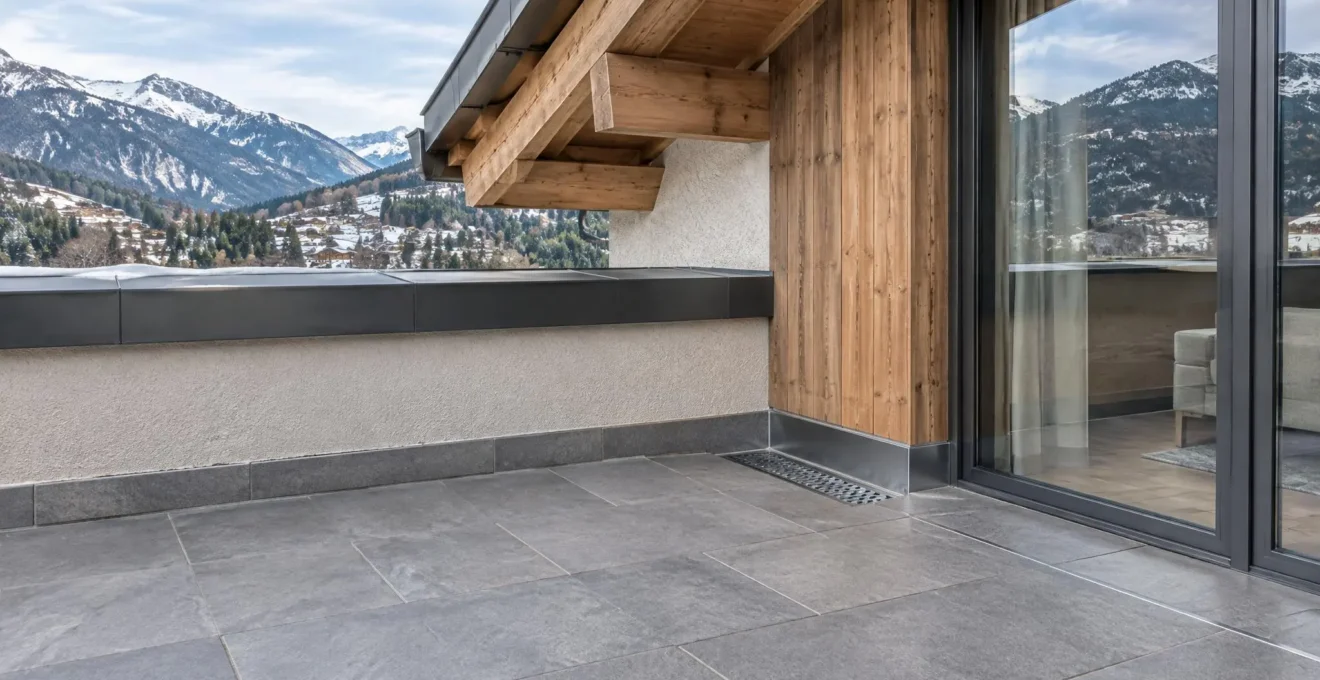
A penthouse can offer valuable outdoor space and elevated views, but its position at the top of a building creates specific inspection questions. First, establish the terrace’s legal classification. It may be a private area, a common area or a common area subject to an exclusive-use right. Physical access alone does not prove ownership.
Next, establish who is responsible for maintaining the roof, terrace waterproofing and drainage. Examine the junction between the terrace and the building, look for signs of water ingress and check that drainage outlets are unobstructed. Insulation and ventilation around roof junctions also deserve attention because temperature differences can contribute to condensation.
In a mountain environment, consider snow accumulation, wind exposure and how outdoor surfaces are maintained. If you plan to modify the terrace, glazing or exterior appearance, check the co-ownership rules and whether authorisation is required.
- Confirm whether the terrace is private, common or subject to an exclusive-use right.
- Check who is responsible for roof and waterproofing maintenance.
- Inspect drainage outlets and signs of water ingress.
- Look for insulation weaknesses and condensation around roof junctions.
- Consider snow accumulation, wind exposure and safe access.
- Verify whether proposed alterations need co-ownership approval.
Read the French Co-Ownership Documents Before Committing
One of the most important differences between buying an apartment in France and buying a detached property is the copropriété system. A co-ownership lot combines private areas with an inseparable share of common areas. The building’s regulations and division documents therefore affect what you own, how expenses are allocated and which activities or alterations are permitted.
Under French co-ownership rules, a terrace, parking space or storage area should not be assumed to have the legal status suggested by its appearance. The French co-ownership rules explain the distinction between private and common areas and the role of the building regulations. These documents should be examined to establish the rights attached to the particular lot.
Request the principal documents and consider what each reveals:
| Document | What it helps you check | Practical concern |
|---|---|---|
| Règlement de copropriété | Permitted use and private/common-area rules | Restrictions on use and alterations |
| État descriptif de division | Lot boundaries and associated shares | What is actually included in the sale |
| General meeting minutes for the preceding three years | Decisions, disputes and approved works | Future expenditure and unresolved problems |
| Maintenance log and technical assessments | Building maintenance and known condition | Roof, lift, heating and common-area upkeep |
| Accounts, charges and works fund | Recurring expenditure and financial position | Unpaid charges and additional contributions |
| Multi-year works plan, where applicable | Anticipated major maintenance | Potential exceptional costs |
The règlement de copropriété is especially important because it sets out how the building operates. It can establish restrictions on use and explain the responsibilities attached to different areas. The état descriptif de division helps identify the lots and their associated shares. Compare both documents with the description of the property being sold.
General meeting minutes are equally useful. Look beyond the most recent meeting: recurring discussions about leaks, lifts, heating, façade maintenance or structural work may reveal issues that have not yet been resolved. Compare those discussions with the maintenance log and the building’s financial accounts.
Ask for information about planned works, the works fund where applicable, unpaid charges and supplier debts. The allocation of expenditure depends on the co-ownership documents and applicable rules. A building-wide works budget should not automatically be treated as the amount payable by the purchaser of one apartment. Ask the notaire to clarify any sums that could be transferred to you.
Calculate the Full Cost of Owning the Property
The purchase price is only one part of the financial commitment. Before making a decision, establish the acquisition costs with the notaire and lender, then build a separate picture of recurring ownership expenses.
For an apartment in a shared building, compare three categories separately: recurring charges documented in the seller’s statements and building accounts; exceptional works already approved by the co-owners; and maintenance or improvements that are merely proposed. Cross-check the meeting minutes, maintenance records and available works planning to understand the status of each expense. Ask the notaire to clarify which approved contributions could affect the particular lot and when they may become payable. A proposed project is not an amount already due, and historically low charges do not guarantee low future costs.
Other costs to investigate include:
- Utilities and heating: identify the heating system, energy arrangements and available consumption records.
- Insurance: establish the cover required for the private lot and any relevant building-related responsibilities.
- Maintenance: account for private installations, interior repairs and any outdoor-space upkeep assigned to the owner.
- Property taxes: confirm the applicable amounts and circumstances rather than relying on estimates from other properties.
- Exceptional works: investigate roof repairs, lift replacements, façade work and other significant shared expenditure.
- Management costs: consider any additional costs associated with seasonal occupancy or rental management.
For a penthouse, clarify whether terrace maintenance and associated building work are charged to the private owner, the co-ownership or both under different circumstances. The allocation may depend on the legal classification of the area and the building’s regulations.
A useful comparison between two properties should therefore include the same categories: acquisition costs, recurring charges, utilities, maintenance and anticipated exceptional expenditure. Compare actual documents wherever possible instead of assuming that a larger or more expensive apartment necessarily has higher charges in every category.
Check Local Hazards, Planning and Winter Access
Mountain property ownership involves environmental considerations that can vary significantly from one address to another. Courchevel’s municipal risk information identifies several hazards, including avalanches, ground movements, flooding, earthquakes and severe weather. This does not mean every apartment is exposed to all these risks.
The municipality’s 2025 risk information describes avalanche exposure in particular urbanised sectors rather than treating the entire commune as uniformly affected. Parts of Courchevel Moriond are specifically discussed in relation to avalanche-prone slopes. The appropriate conclusion is to check the exact building location, not to assume that the same risk applies to every property in the resort.
Consult the applicable natural-risk documentation and request the reports relating to the property. Check whether the plot falls within a relevant risk-prevention zone and establish which restrictions or protective requirements apply. A general municipal risk inventory is a starting point, not a substitute for address-specific documentation.
Planning information matters as well. Ask the mairie about applicable zoning, easements, authorised works and relevant neighbouring development proposals. A change in the surrounding area could affect access, privacy, views or the practical use of the property.
Finally, investigate winter access independently of the property’s marketing description. Check the gradient of the approach, road maintenance, snow clearance, parking arrangements and the route between the entrance and essential facilities. If you can visit in different seasons, compare how the surroundings and access change.
A commune-wide risk listing is not a property-specific verdict. Courchevel’s 2025 municipal risk document identifies several hazards and describes geographically concentrated avalanche exposure. Check the exact address and the relevant risk documentation before drawing conclusions about an individual building.
Verify the Documents and Conditions Before Signing
Once you have completed the inspection and reviewed the building records, the remaining step is to establish that the property being transferred matches the documents and the terms you intend to accept. Confirm the seller’s ownership, the exact lots included in the transaction, any relevant easements and the legal status of parking, storage and outdoor areas.
A French property purchase can involve three distinct stages. Before making an offer, identify any uncertainty about the apartment, building or purchase costs that could change your decision; an offer may itself have legal consequences, so its terms deserve attention. Before signing a preliminary agreement, such as a compromis de vente or promesse de vente, review the available diagnostics and co-ownership documents with the notaire, including financing conditions, applicable withdrawal rights and the allocation of charges and works. Before the final authentic deed, confirm that the lots, outstanding obligations and contractual conditions match the definitive documentation. The notaire prepares and authenticates that final deed, but the legal consequences and protections at each stage depend on the particular transaction.
The French government’s official purchase documentation explains the information supplied during a condominium purchase, including co-ownership records and technical reports. Check the current requirements and the reports applicable to the individual property rather than relying on a generic list alone.
Before committing, ask the notaire to clarify any unresolved issue involving the title, building regulations, terrace rights, outstanding charges, planned works or planning restrictions. Where a technical concern remains, obtain the appropriate specialist assessment and understand how the contract addresses it. A clear answer before signing is more useful than an assumption based on a viewing or an estate listing.
Make the Decision Based on the Whole Property
A suitable Courchevel apartment or penthouse is one whose location, condition, legal rights and ongoing costs match your intended use. Check the private space and the shared building, establish the actual status of terraces and facilities, and understand the financial and environmental considerations attached to the exact address.
Most importantly, treat the viewing, documentary review and notarial checks as parts of the same decision. When a point remains unclear, resolve it before becoming contractually committed. This approach gives you a more reliable basis for comparing properties than views, advertised features or purchase price alone.